GPS from the expansion card (4G card or AIO)
Two receivers, two recipes: the 4G card's GNSS via AT+CGPS on /dev/ttyUSB3, or the AIO's GPS on the serial port (/dev/ttyS0 CM4, /dev/ttyAMA0 CM5) at 9600 baud.
What it takes
- Software only
- Config change
- Purchase required
Difficulty 1 of 3 - easy.
Details
ClockworkPi's 4G card has a GNSS receiver behind the modem: send AT+CGPS=1 to /dev/ttyUSB3 (the wiki uses socat), wait a minute, then read fixes with AT+CGPSINFO or as NMEA on /dev/ttyUSB1. rikiwarren got it working without a SIM using AT+CVAUXS=0 and AT+CGPS=1,1 in minicom, while hyperyay's ModemManager route (mmcli -m any --location-enable-gps-nmea) needs a SIM inserted. It wants an active L1 GNSS antenna on the card's IPEX connector.
The HackerGadgets AIO's GPS is a plain 9600-baud serial receiver: enable the UART (enable_uart=1 on a CM4, dtparam=uart0 on a CM5), remove console=serial0,115200 from cmdline.txt on the CM4, then gpsd /dev/ttyS0 (CM4) or gpsd /dev/ttyAMA0 (CM5); PPS is on GPIO 6. Rex's AIO package installs PyGPSClient - on a CM5 pick the second serial device - and null's thread is where to look if PyGPSClient sees satellites but gpsd shows no SKY data (a 4G modem autostarting and grabbing the port was one cause).
Links
Open at Forum threadRelated mods
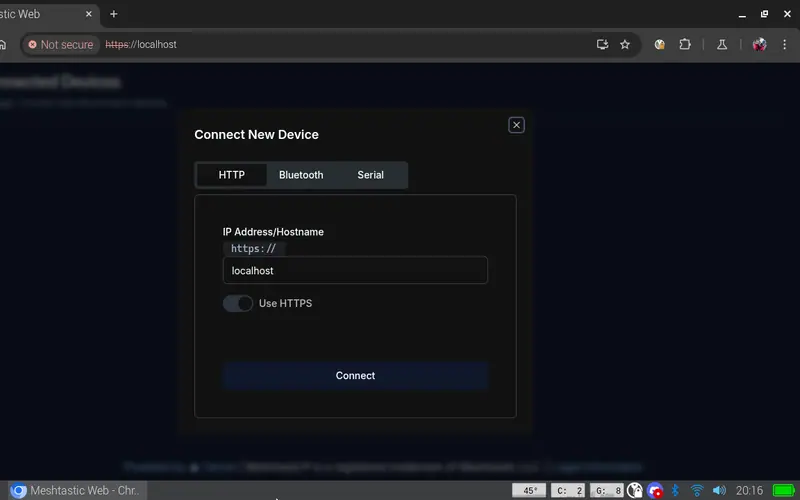
Run a Meshtastic node on the console itself: meshtasticd drives the AIO's SX1262 over SPI, with the graphical MUI, the web UI or the Contact TUI client on top.
On Rex's images a single apt install gives you SDR++ for the AIO's RTL-SDR or a USB dongle; his AIO package adds the sdrpp-brown fork.
The AIO's PCF85063A keeps time off-grid once the right overlay is in config.txt - and on a CM5 the built-in fake RTC has to be switched off first.
Rex's AIO package ships readsb and the tar1090 map as a disabled service with a menu launcher; Intercept or a hand-built dump1090 are the alternatives.
MeshCore has no Linux-native node firmware, so the community built on pyMC_core: guax's YAMPA packet analyser and TUI chat client, and cwill747's GTK app.

HackerGadgets' MIT-licensed CLI and tray tool toggles the AIO v2's GPIO-controlled power rails (GPS, LoRa, SDR, USB) so idle radios stop draining the battery.